Testimonial tools all promise the same thing — more social proof with less effort — and they all look convincing in a demo. The differences that matter only show up later: in how many customers actually finish the flow, in how the testimonials read, and in what happens when you want your data back.
Here's the checklist we'd use to evaluate any tool in this category, including ours.
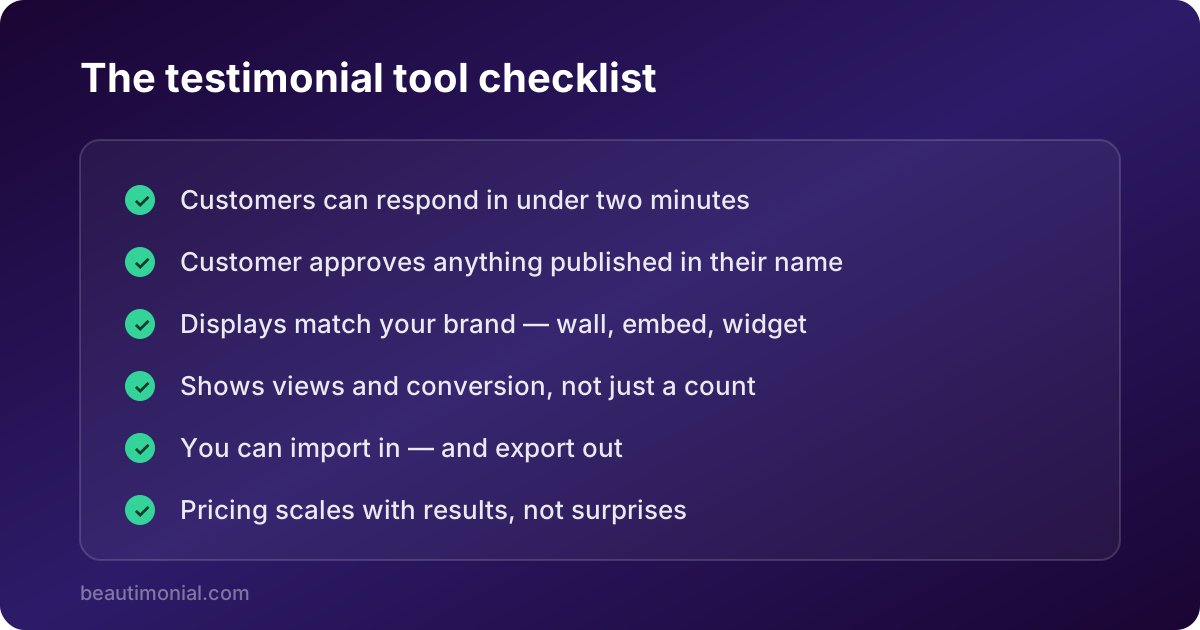
1. Can a customer finish in under two minutes?
Collection friction is the silent killer. Every extra step — creating an account, recording a take, composing an essay into a blank box — loses real customers. Walk through the tool's flow yourself, on your phone, and time it. If you can't get from link to submitted in about two minutes, most of your customers won't either. Guided questions beat blank boxes; no signup beats any signup.
2. Does it keep testimonials honest?
Any tool that helps polish customer words needs a bright line: the customer approves what's published in their name, and you keep the original on file. If a tool lets text go public that the customer never saw, that's not polishing — that's putting words in people's mouths, and it will eventually cost you the trust the testimonials were supposed to build. Look for customer approval steps and a moderation queue you control.
3. Will it look like your site, everywhere you need it?
Social proof works where decisions happen, which means you need more than one display surface: a hosted page you can link to, an embed that inherits your theme and resizes itself, and a widget that doesn't scream third-party. Check for light and dark modes, your brand colors, and whether removing the vendor's badge is possible on the plan you'd actually buy.
4. Can it prove it's working?
A raw count of testimonials tells you the tool collects. It doesn't tell you the widget converts. The difference between a tool and a toy is measurement: views on your pages, submissions over time, the share of viewers who become customers or reviewers, and — if it screens with an NPS question — your score and trend. If you can't answer "what is this earning us?" from the dashboard, you're flying blind at renewal time.
5. Is your data actually yours?
Two directions matter. In: can you import the testimonials you already have — from spreadsheets, review platforms, or a previous tool — with their original dates? Out: if you ever leave, can you take everything with you? A tool confident in its product makes both easy. Also check the privacy posture: customer emails collected during submission should never be exposed publicly, full stop.
6. Does the pricing scale with results?
Watch for the two classic traps: free tiers that cripple the one feature you need, and per-seat pricing for what is fundamentally a one-person workflow. Fair pricing in this category tracks usage — how much you collect and polish — with limits you can see on your dashboard before you hit them.
Run the one-week test
Shortlist two tools and run the same experiment on each: install in one afternoon, send the collect link to five recent customers, and count what comes back by Friday. The tool that produced more finished, publishable testimonials with less chasing is the right one — whatever the feature matrices say.
We built Beautimonial to pass this checklist: a two-minute guided flow, customer-approved polish, walls and embeds that match your brand, view-to-testimonial conversion tracking, CSV import with dates preserved, and plan limits that are visible before you hit them. Run the one-week test on us — the demo is free.