Ask a happy customer to "write a short testimonial" and you've handed them homework. They have to decide what to say, how to structure it, how to sound smart. Most never start. The few who do usually send back something safe and vague: "Great product, highly recommend."
Now ask the same customer "what were you struggling with before you found us?" and watch what happens. Specific answers pour out, because you asked a specific question. Nobody freezes up describing their own experience — they freeze up composing an essay.
That's the whole trick behind great testimonial collection: stop requesting testimonials and start asking questions. The answers, stitched together, are the testimonial.
Follow the story arc
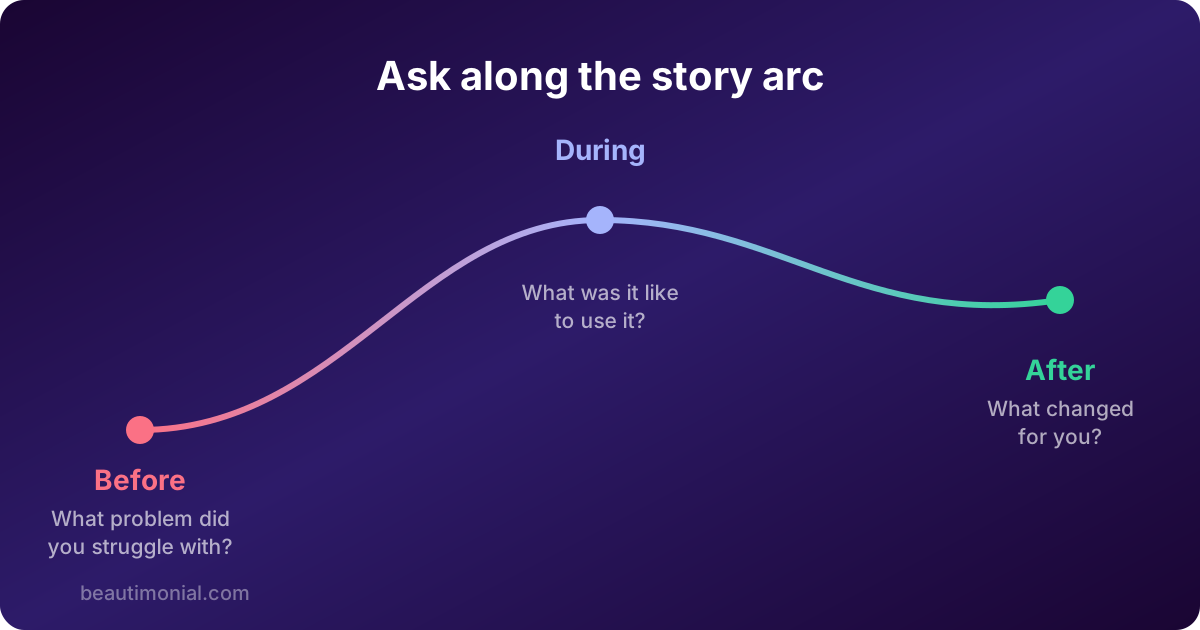
The most persuasive testimonials read like tiny stories, and stories have structure: a problem, an experience, an outcome. Your questions should walk the customer through exactly that arc. Here are ten that do, grouped by act.
Act one: the before
- 1. What was the biggest frustration you were dealing with before you found us? — surfaces the pain your future customers will recognize in themselves.
- 2. What had you already tried? — "I tried three other tools first" makes the eventual praise far more credible than instant enthusiasm.
- 3. What almost stopped you from buying? — objections named and overcome are the most persuasive sentences in any testimonial, because they're your prospect's objections too.
Act two: the during
- 4. What surprised you once you started? — surprise produces vivid, quotable language that no template can.
- 5. How long did it take to see a result? — timelines make stories concrete: "within the first week" beats "quickly" every time.
- 6. What's your favorite part of using it? — invites the enthusiastic detail that gives a testimonial personality.
Act three: the after
- 7. What's different for you now? — the transformation question. This answer is usually the heart of the finished testimonial.
- 8. Can you put a number on it? — hours saved, sales gained, reviews collected. One real number outweighs a paragraph of adjectives.
- 9. Who would you recommend this to? — customers describe your ideal buyer better than your marketing does, and prospects hear themselves being described.
The closer
- 10. If a friend was on the fence, what would you tell them? — reframes the testimonial as advice to a friend, which is exactly the voice that converts strangers.
From answers to testimonial
Here's what the arc looks like in practice. A course customer answers three questions with: "I'd bought two other courses and finished neither" (before), "the lessons are 10 minutes so I actually did them on my commute" (during), and "I shipped my first real project in three weeks" (after). Stitched together and lightly polished, that becomes:
“I'd bought two other courses and never finished either one. These lessons are ten minutes each, so I actually did them on my commute — and three weeks in, I shipped my first real project.”
Nothing was invented. Every fact came from the customer; the questions just made sure the facts arrived in story order.
Using the questions well
Don't use all ten at once — three or four per customer is plenty, one per act. Short answers are fine; two honest sentences about a real before-and-after beat a polished paragraph of nothing. And always keep the customer in charge of their own words: whatever gets published should be reviewed and approved by the person who said it.
This arc is built into Beautimonial's guided Q&A flow: you set the questions, customers answer them one at a time on your site or your collect link, and one click turns their answers into a single polished testimonial they approve before it's submitted. The story structure does the selling — your customer just tells the truth.