Nobody believes your headline. That's not an insult — it's how buying works. You wrote the headline, so of course it says your product is great.
But when another customer says the same thing? Suddenly it's evidence. That's social proof: we look at what people like us did, and we copy it.
Why it works
Every purchase is a small risk. Will this course actually teach me? Will this store actually ship? Testimonials lower that perceived risk by showing someone already took the leap and landed well. The more similar that someone feels to your visitor, the stronger the effect.
The hierarchy of social proof
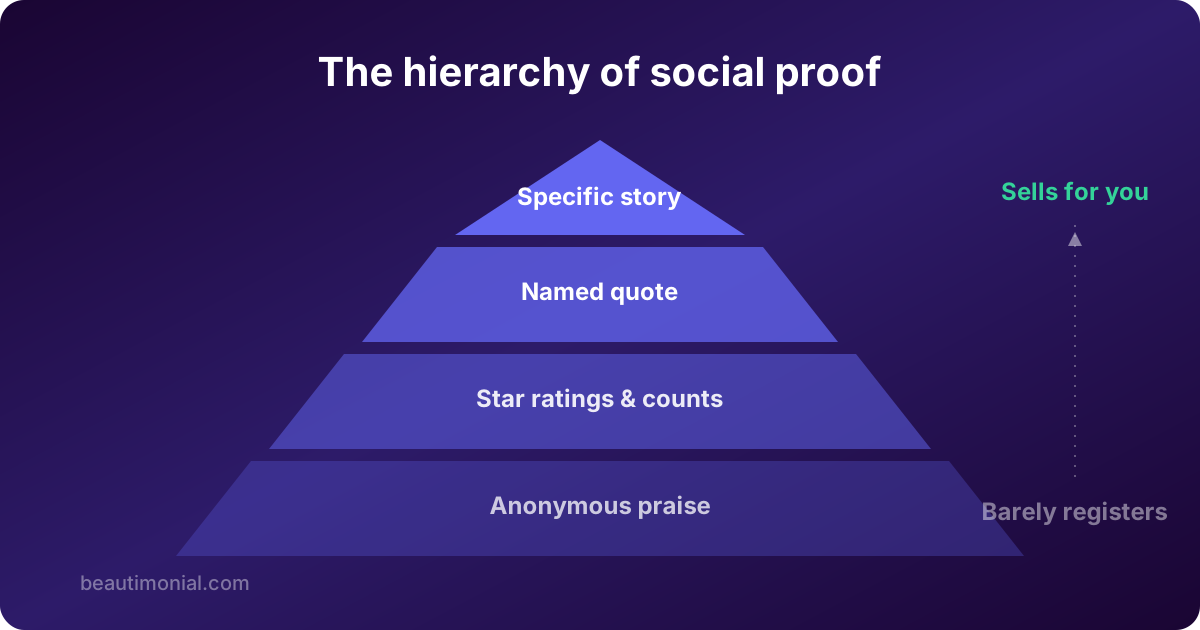
- A specific story with a name and role — the gold standard.
- A short quote with a real first name — solid and believable.
- Star ratings and counts — useful supporting signal.
- Anonymous praise — better than nothing, but barely.
Notice what's at the top: stories, not scores. A five-star average tells visitors you're fine. A customer explaining exactly how you helped tells them you're the answer.
Starting from zero
No testimonials yet? Every brand starts there. Deliver a great experience to your first handful of customers and capture their reaction immediately — that's the whole playbook. Five specific, authentic quotes will outsell fifty generic ones.
The key is having a system that captures feedback the moment it happens, instead of relying on memory and follow-up emails. Put collection on autopilot early, and your social proof compounds with every sale.